Choosing between Xero and FreshBooks can be challenging. Both offer excellent features for accounting needs.
Comparing Xero and FreshBooks helps you decide which fits your business best. Both are popular accounting software options with unique strengths. This comparison will help you understand their differences and similarities. Knowing these can save you time and money. It ensures you pick software that aligns with your needs.
We will explore key features, pricing, and user experiences. This will guide you in making an informed decision. Ready to find out which is better for you? Let’s dive in.

Credit: linkmybooks.com
Key Features Comparison
Xero offers strong inventory management and payroll features. FreshBooks excels in time tracking and client invoicing. Both provide robust accounting tools for small businesses.
Choosing the right accounting software is crucial for small businesses. Both Xero and FreshBooks offer unique features. This section compares their key features to help you decide.
User Interface
Xero has a clean and modern design. It feels intuitive and easy to use. Users can customize the dashboard to suit their needs. Navigation is simple, with everything accessible from the main menu.
FreshBooks also boasts a user-friendly interface. It has a more colorful and engaging design. The layout is straightforward, making it easy to find tools. Both beginners and experienced users can navigate it easily.
Invoicing Capabilities
Xero offers robust invoicing features. Users can create and send invoices quickly. It allows for invoice customization with logos and templates. You can also set up automated invoice reminders.
FreshBooks excels in invoicing as well. It provides professional-looking invoice templates. Users can create recurring invoices for regular clients. The software also supports multi-currency invoicing.
Expense Tracking
Xero makes expense tracking simple. Users can upload receipts directly to the software. It categorizes expenses automatically. This feature helps in keeping accurate records.
FreshBooks also offers effective expense tracking. Users can snap photos of receipts using the mobile app. It syncs expenses with bank accounts for easy reconciliation. FreshBooks categorizes expenses, making bookkeeping easier.
“`

Credit: ebetterbooks.com
Pricing Plans
Choosing the right accounting software often comes down to pricing plans. Understanding the cost helps businesses make informed decisions. Let’s compare the pricing plans of Xero and FreshBooks.
Xero Pricing Tiers
Xero offers three pricing tiers. The Starter plan costs $25 per month. It includes basic features for small businesses. The Standard plan costs $40 per month. It has more features for growing businesses. The Premium plan costs $54 per month. It suits larger businesses with complex needs. Xero also offers a 30-day free trial. This helps users explore the software before committing.
Freshbooks Pricing Tiers
FreshBooks provides four pricing plans. The Lite plan costs $15 per month. It’s suitable for freelancers and small businesses. The Plus plan costs $25 per month. It’s ideal for businesses with multiple clients. The Premium plan costs $50 per month. It offers advanced features for larger businesses. FreshBooks also has a Select plan. This plan has custom pricing for enterprises. FreshBooks offers a 30-day free trial too. It allows users to test the software risk-free.
Value For Money
Both Xero and FreshBooks offer good value for money. Xero’s plans are straightforward and include essential features. FreshBooks has flexible pricing and suits various business sizes. Both offer free trials to assess their services. This ensures users can choose the best fit without any risk. Considering your business needs will help you decide which software provides the best value.
Integration And Compatibility
Choosing the right accounting software involves more than just basic features. Integration and compatibility play a key role in efficiency and ease of use. Let’s dive into how Xero and Freshbooks fare in this department.
Third-party Integrations
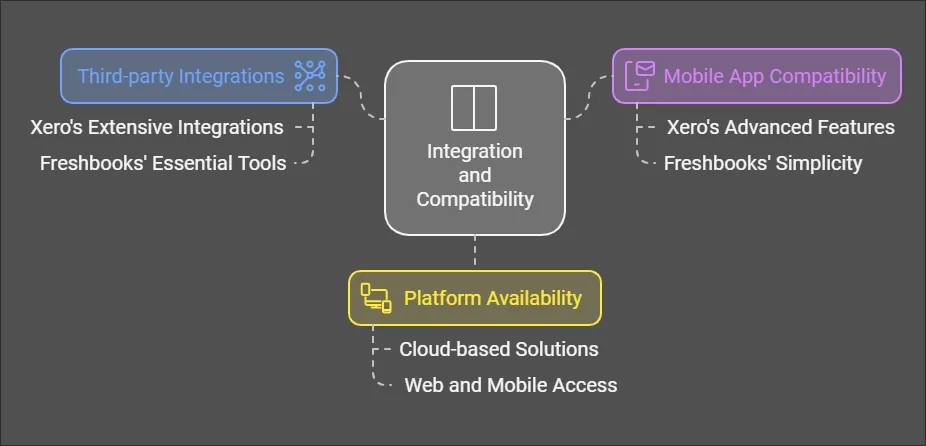
Xero offers a wide range of third-party integrations. It connects seamlessly with over 800 apps. This includes CRM systems, payroll apps, and e-commerce platforms. Freshbooks also supports third-party integrations. It connects with around 100 apps. These include payment gateways, time tracking tools, and project management software.
Xero’s extensive integrations provide more options. Freshbooks’ integrations are fewer but cover essential tools. Depending on your business needs, one may suit you better.
Mobile App Compatibility
Both Xero and Freshbooks offer mobile apps. These apps help manage your finances on the go. Xero’s mobile app has strong features. You can invoice, reconcile, and track expenses. Freshbooks’ mobile app is user-friendly. It allows you to create invoices, track time, and capture expenses.
The mobile apps for both platforms are available on iOS and Android. Xero’s app has more advanced features. Freshbooks’ app is simpler and easier to use. Consider what you value more: advanced features or simplicity.
Platform Availability
Xero and Freshbooks are both cloud-based solutions. This means you can access them from any device with an internet connection. Xero is accessible via web browsers and its mobile app. Freshbooks is also accessible through web browsers and its mobile app.
Both platforms offer similar availability. They ensure you can manage your finances anytime, anywhere. Your choice depends on which platform’s features align with your needs.
Customer Support
Customer support is crucial in accounting software. Xero and FreshBooks both offer support, but their approaches differ. This section compares their support channels, response times, and user reviews to help you decide which software provides better customer service.
Support Channels
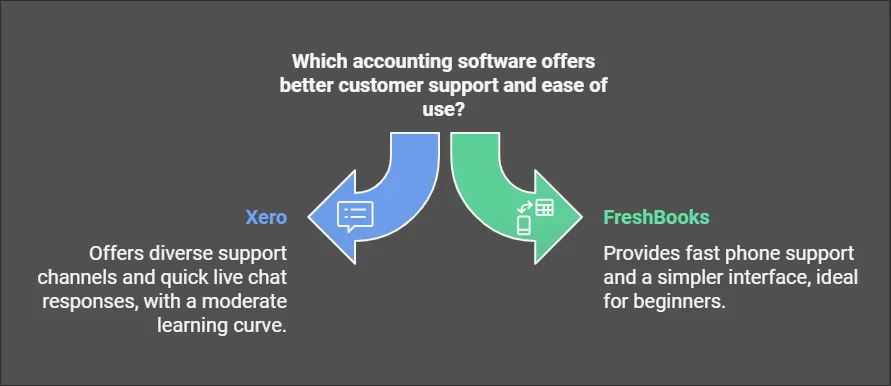
Xero offers various support channels. Users can access email support, live chat, and a comprehensive online help center. Xero’s help center includes articles, tutorials, and community forums.
FreshBooks also provides multiple support options. Users can reach out via email, phone support, and an extensive knowledge base. FreshBooks’ knowledge base includes guides, how-to articles, and video tutorials.
Response Time
Xero’s email support usually responds within 24 hours. Live chat offers quicker responses, often within minutes. Their help center is available 24/7 for self-service support.
FreshBooks’ phone support is known for quick response times. Customers report getting help within minutes. Email support responses generally come within a day. The knowledge base is accessible at any time for immediate assistance.
User Reviews
Users often praise Xero’s live chat for fast resolutions. The community forums are also helpful, with active user participation.
FreshBooks receives positive feedback for its phone support. Users appreciate speaking to a real person quickly. The knowledge base is also well-received for its detailed guides.
Ease Of Use
When choosing between Xero and Freshbooks, ease of use is a key factor. You want software that saves time and reduces stress. Let’s explore how each one fares in different aspects of usability.
Setup Process
Starting with Xero is straightforward. You sign up and follow easy prompts. The setup wizard guides you through linking bank accounts and customizing invoices. It takes only a few steps to get up and running.
Freshbooks also offers a simple setup. After signing up, the software asks basic questions about your business. You can quickly link your accounts and start invoicing. Both platforms make the initial process smooth and quick.
Navigation
Xero features a clean, modern interface. The dashboard gives a clear overview of your finances. Menus are intuitive and easy to navigate. You can find key functions without much effort.
Freshbooks offers an equally user-friendly experience. The dashboard is straightforward and visually appealing. Navigation is simple, with clear labels and icons. You can easily access invoices, expenses, and reports.
Learning Curve
Xero has a moderate learning curve. Its extensive features might take some time to master. But, the software offers tutorials and a helpful support center. With a bit of effort, you can become proficient.
Freshbooks is easier for beginners. Its interface is simpler and more intuitive. You can learn the basics quickly without much training. It’s designed to be user-friendly, even for those new to accounting software.
Credit: zapier.com
Security Measures
Security is a major concern when choosing accounting software. Both Xero and FreshBooks offer robust security measures to protect your financial data. Let’s dive into the specific security features of each platform.
Data Encryption
Xero uses industry-standard data encryption to keep your information safe. It employs 256-bit SSL encryption. This ensures data is encrypted during transmission. FreshBooks also uses 256-bit SSL encryption. This level of encryption is common in banking systems. It secures your data from unauthorized access.
User Authentication
Xero provides two-step authentication for user accounts. This adds an extra layer of security. Users need a password and a code sent to their phone. FreshBooks offers similar two-step authentication. This method ensures only authorized users can access sensitive data.
Backup And Recovery
Xero regularly backs up your data. This ensures data can be recovered in case of a system failure. The backups are stored in multiple locations. FreshBooks also performs regular backups. It ensures your data is safe and recoverable. Both platforms offer reliable backup and recovery options.
User Feedback
User feedback plays a crucial role in choosing the right accounting software. Both Xero and FreshBooks have their loyal users. These users share various experiences that can help you decide which software suits your needs better.
Xero User Experiences
Xero users appreciate the software’s robust features. Many small business owners find Xero easy to use. They often highlight its seamless bank reconciliation. Users also love the wide range of integrations. They feel these integrations simplify many tasks.
Accountants and bookkeepers also praise Xero. They find its reporting tools very helpful. These tools make financial analysis straightforward. Additionally, users like the mobile app. It lets them manage finances on the go.
Freshbooks User Experiences
FreshBooks users often highlight its user-friendly interface. Many freelancers and small business owners find it intuitive. They appreciate the ease of creating and sending invoices. The time-tracking feature is also a favorite. It helps users bill clients accurately.
Another popular feature is the customer support. FreshBooks users often commend the helpful and responsive support team. They find the guides and tutorials valuable too. Users feel these resources help them make the most of the software.
Common Complaints
While both platforms have many fans, they also face criticism. Xero users sometimes mention a steep learning curve. New users might need time to get comfortable. Some also find the pricing a bit high, especially for smaller businesses.
FreshBooks users, on the other hand, sometimes miss advanced features. Larger businesses might find it lacking in-depth tools. Some users also find the reporting options limited. They feel it could offer more detailed insights.
Both Xero and FreshBooks have their strengths and weaknesses. User feedback highlights these aspects, helping you make an informed choice.
Final Verdict

Choosing between Xero and FreshBooks can be challenging. Both accounting software solutions offer unique features. Your choice will depend on your specific needs and preferences. Below, we break down the final verdict for small businesses, freelancers, and the overall winner.
Best For Small Businesses
Xero stands out for small businesses. It offers a wide range of features. These include inventory management, detailed reporting, and multi-currency support. Xero also integrates with over 800 third-party apps. This makes it highly versatile for various business needs. Small businesses will find Xero’s comprehensive features invaluable. Its scalability ensures it grows with your business.
Best For Freelancers
FreshBooks is ideal for freelancers. It simplifies invoicing and expense tracking. The user-friendly interface makes it easy to navigate. FreshBooks also offers time-tracking and project management tools. Freelancers will appreciate the straightforward, intuitive design. It saves time and effort in managing finances. FreshBooks’ affordability and simplicity make it a top choice for freelancers.
Overall Winner
Both Xero and FreshBooks have their strengths. Xero excels in features for small businesses. FreshBooks shines in simplicity for freelancers. The overall winner depends on your specific needs. For robust features and scalability, choose Xero. For ease of use and affordability, FreshBooks is the better option. Evaluate your business requirements and select the software that best fits your needs.
Frequently Asked Questions
Which Is Better For Small Businesses, Xero Or Freshbooks?
Xero is great for growing businesses. FreshBooks suits freelancers and small businesses better.
Does Xero Offer Better Integrations Than Freshbooks?
Yes, Xero integrates with over 800 apps. FreshBooks supports fewer integrations but covers essentials.
Is Freshbooks Easier To Use Than Xero?
FreshBooks is user-friendly and simple. Xero has more features but a steeper learning curve.
Do Xero And Freshbooks Support Invoicing?
Both support invoicing. FreshBooks offers customizable templates. Xero provides more advanced options.
Which Software Is Cheaper, Xero Or Freshbooks?
FreshBooks offers lower starting prices. Xero plans can be costlier but include more features.
Can I Use Xero Or Freshbooks For Payroll?
Xero has built-in payroll for some regions. FreshBooks requires third-party apps for payroll.
Do Both Xero And Freshbooks Offer Mobile Apps?
Yes, both offer mobile apps. Xero’s app is more robust. FreshBooks focuses on simplicity.
Which Has Better Customer Support, Xero Or Freshbooks?
FreshBooks is known for excellent support. Xero also offers good support but can be slower.
Conclusion
Choosing between Xero and Freshbooks depends on your business needs. Xero offers robust features for larger companies. Freshbooks provides simplicity for freelancers and small businesses. Both tools have unique strengths. Test both to see which fits better. Evaluate your accounting requirements carefully.
Consider user experience and support options. Make an informed decision for your business growth. With the right software, managing finances becomes easier.